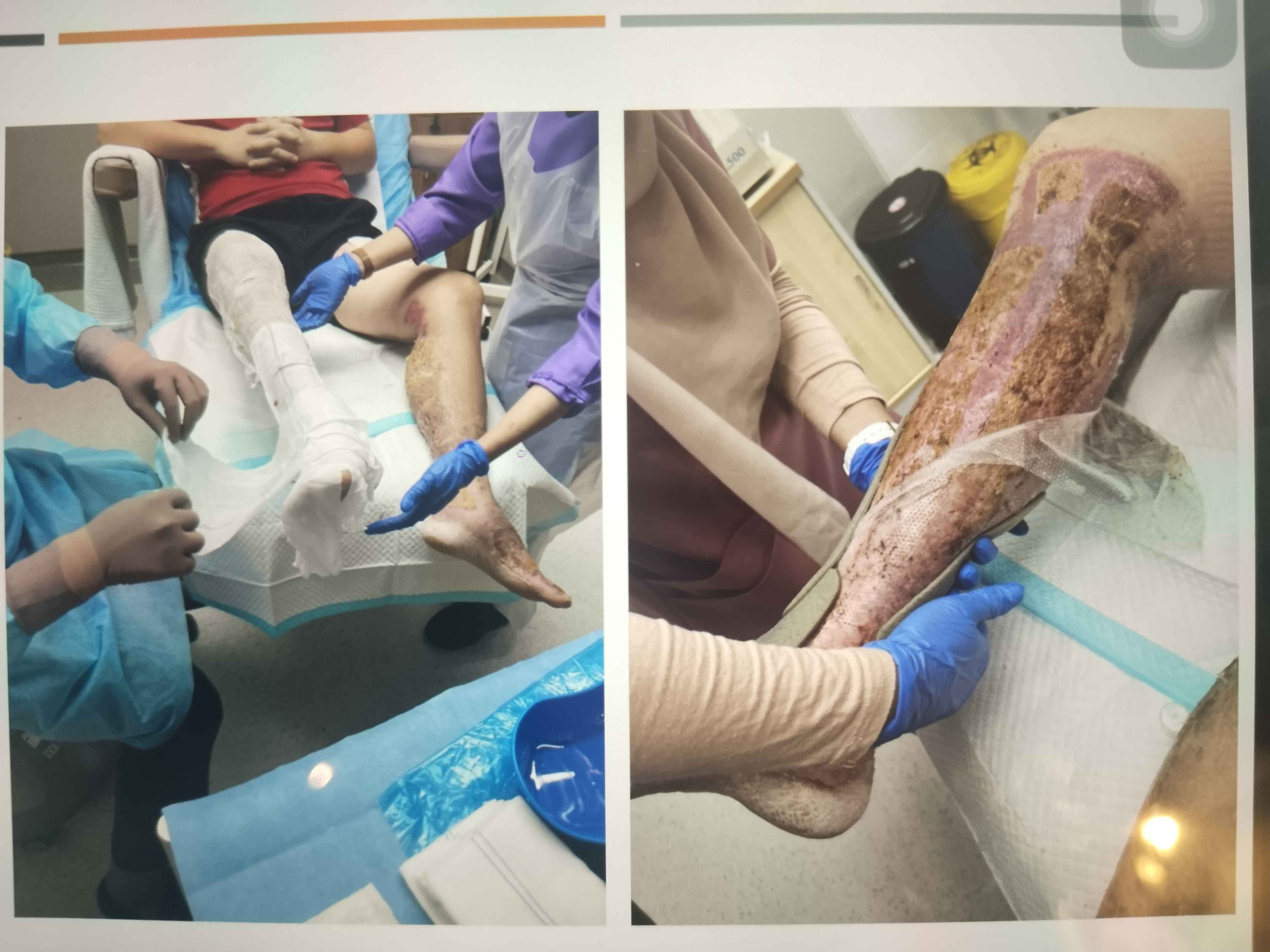
The day he only wanted to cook a simple dinner
The moment he turned on the gas, a powerful wave of heat suddenly erupted. The entire kitchen door was blown open by the blast, and the heat surged straight toward his legs.
There were no roaring flames and the house was not on fire, so in that moment he thought he had only been scalded by hot air. He did not realise that he had already been severely burned.
It was only after he reached the hospital, when the doctor examined him, that they discovered about 26% of his body had suffered second-degree burns, and he had to be admitted to the Intensive Care Unit (ICU) immediately. With extensive burns, the greatest concern is not just the wounds themselves, but the risk of serious infection that follows.
That stay lasted 33 days.
Every day involved cleaning the wounds, changing dressings, and removing dead tissue. He later underwent a skin graft, in the hope that the wounds would gradually heal.
The truly hard part came after discharge
To help the wounds recover, his legs had to be kept elevated for long periods. The moment he lowered them, blood would flow back to the burned areas, causing an indescribable stinging pain — as if millions of ants were crawling over him without stopping, almost beyond what anyone could bear.
Days like these lasted not for a few days, nor a few weeks, but for a very long time.
During recovery, he had to return to the hospital for follow-ups again and again, and continue with ongoing wound care. His medical card covered the hospitalisation, ICU, and most of the treatment costs, but the road to recovery still involved many out-of-pocket expenses — such as specialised burn dressings, long-term wound-care supplies, and other items needed to aid recovery — all of which he had to bear himself.

Fortunately, he already had solid insurance protection
Beyond the medical card that paid for his hospitalisation and treatment, because the burns covered 26.5% of his body and met the Prime Care+ burn benefit definition, he also received a cash payout of RM200,000.
This money was not about "making a profit."
It was about giving him the ability — at a time when he could not work and needed a long recovery — to buy the care supplies his doctor recommended, specialised burn dressings, and recovery aids, and to cover living expenses during recovery, so that financial pressure would not get in the way of his treatment.
An accident takes only a few seconds to happen.
But true recovery can take months, or even longer.
Insurance cannot stop an accident from happening, but in the hardest moments it can let a person focus on treatment and recovery — rather than worrying every day about medical bills, living costs, and future expenses.
What truly matters is not whether insurance will ever be used, but whether — when life really does bring an accident — you still have a choice.
Disclaimer
This article is for educational purposes only and does not constitute financial or insurance advice. Coverage terms are subject to the policy contract. Contact Faith for personalised advice.